

Healthndevelopment museum
Explore over three decades of global health, civic leadership, and human development. From interactive digital walls to travelling exhibits touring nationwide and across continents, our visual archives welcome students, families, healthcare professionals, and international observers to discover the transformative movements shaping our world.

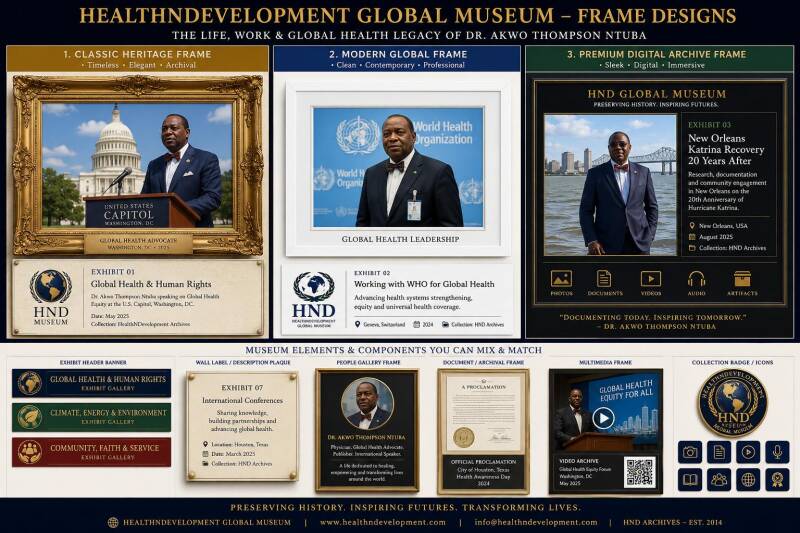
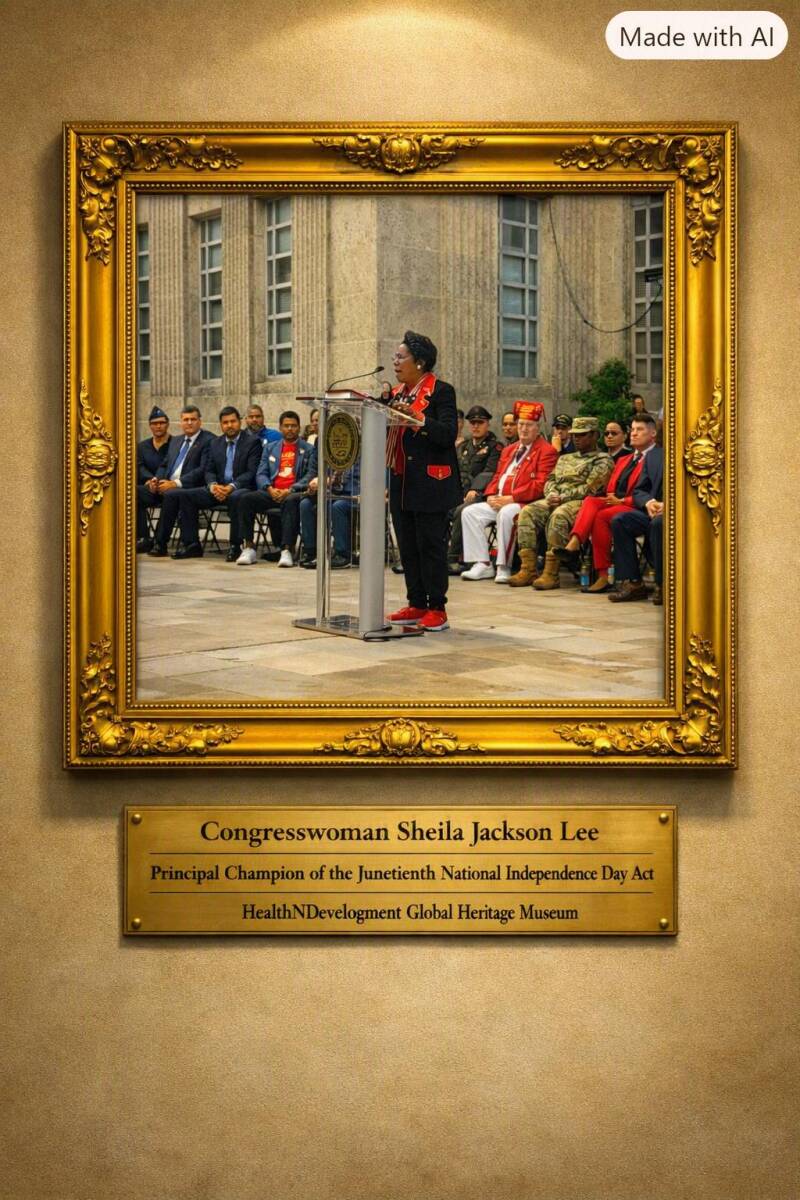
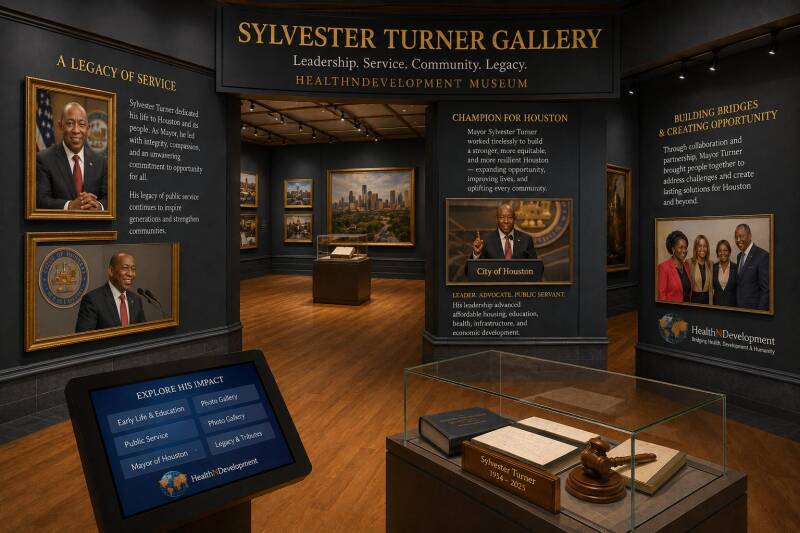
Civic leadership and historic milestones
Immerse yourself in pivotal moments of modern governance, featuring visual galleries of presidential inaugurations, national campaign conventions, and mayoral achievements. Witness the historic passage of affordable healthcare legislation, Pope Francis's first address to the United States Congress, and impactful work from the Congressional Black Caucus championing policy and health equity.

Civil rights, justice, and community voices
Reflect on the ongoing struggle for equality through moving documentary imagery of Black Lives Matter marches, the George Floyd racial justice movement, and dedicated Latino and minority community archives. These exhibits highlight the grassroots organizers, leaders, and families who transform advocacy into enduring civic change across American cities and counties.

Global health summits and world stages
Discover the international dimension of human progress through retrospective coverage of the Africa-USA summits, medical specialty congresses, and global athletic milestones like the World Cup. These curated collections trace how worldwide collaboration and cross-border initiatives build healthier, more resilient societies across every continent.

Beyond the ordinary
The Healthndevelopment Museum: Preserving Three Decades of Health, Development and Civic History
The Healthndevelopment Museum represents an important dimension of the broader Healthndevelopment Week initiative: the preservation of history through images, stories, events and experiences that document more than three decades of work in health, development, civic leadership and community engagement.
Rather than viewing history as something confined to books and traditional museums, the Healthndevelopment Museum presents an approach in which digital archives and visual storytelling become tools for learning. Its collections bring together moments from public life, health policy, civil rights, international development, community movements and global events, creating a visual record of the people and institutions that have helped shape contemporary society. Health and Development Week
A Museum Built Around Memory and Experience
The museum describes itself as a place where visitors can explore more than three decades of global health, civic leadership and human development. Its concept extends beyond a conventional physical museum. Digital walls, visual galleries and travelling exhibitions provide ways for students, families, healthcare professionals and international audiences to encounter historical material. Health and Development Week
This approach is significant because photographs and visual documentation can preserve aspects of history that statistics and written reports sometimes cannot. A photograph of a public gathering, a health conference, a civil rights demonstration or a political milestone can provide a sense of place and human experience while also becoming part of a larger historical record.
The museum therefore functions as both an educational resource and an archive.
Civic Leadership and Historic Milestones
One of the museum's major themes is civic leadership.
Its collections include visual material relating to presidential inaugurations, national political conventions, mayoral achievements and significant moments in American public life. The museum also highlights the passage of healthcare legislation, Pope Francis's first address to the United States Congress and the work of the Congressional Black Caucus in areas connected to policy and health equity. Health and Development Week
These subjects demonstrate how health and development intersect with civic institutions. Public health policy is not created in isolation. It is influenced by political leadership, legislation, community advocacy and the work of organizations and individuals seeking changes in society.
By bringing these stories together, the museum places health within a wider historical context.
Civil Rights, Justice and Community Voices
Another important section of the museum focuses on civil rights, justice and community voices.
The collections include documentary imagery associated with Black Lives Matter demonstrations, the George Floyd racial justice movement and Latino and minority community archives. According to the museum, these exhibits emphasize grassroots organizers, community leaders and families whose experiences have contributed to civic change. Health and Development Week
Preserving these materials is important because movements for social change are made up not only of prominent public figures but also of ordinary people. Marches, community meetings, public demonstrations and local organizing can become part of the historical record.
A museum that documents these experiences can help future generations understand that social development is often created through sustained participation at the community level.
Global Health and International Collaboration
The Healthndevelopment Museum also looks beyond the United States.
Its global collections include retrospective coverage of Africa-USA summits, medical specialty congresses and international events such as the World Cup. These materials illustrate the international dimension of health and development and the connections that exist among countries, institutions and communities. Health and Development Week
Global health depends on collaboration across borders. Medical research, professional education, public-health programs, humanitarian responses and development initiatives frequently involve people and organizations from different countries.
The museum's international perspective reflects this interconnectedness and places local experiences within a broader global story.
A Living Archive
The museum is particularly significant when considered alongside the wider mission of Healthndevelopment Week.
Healthndevelopment Week describes itself as the public-facing platform for more than three decades of work involving conferences, workshops, summits, festivals and partnerships across Africa, Europe and communities throughout the United States. It describes its archive as a way of bringing past achievements together with present activities and future initiatives. Health and Development Week
The museum can consequently be understood as part of a living archive.
A living archive is not simply a storage place for old material. It allows historical information to remain relevant by connecting it with current conversations and future learning. Yesterday's conference, community movement or health initiative can provide context for understanding today's challenges.
Connecting Generations
One of the greatest opportunities presented by the Healthndevelopment Museum is intergenerational learning.
Older generations may recognize events and movements they experienced personally, while younger visitors can encounter those moments as history. Students can explore photographs and archives as starting points for research. Healthcare professionals can examine the evolution of health-related conversations. Communities can see their own experiences reflected in a broader historical narrative.
This creates an educational relationship between the past and the present.
The museum can also encourage visitors to ask important questions: What has changed? What challenges remain? Who contributed to that change? What lessons can be carried forward?
From Archive to Future
The museum's value ultimately lies not only in what it preserves but also in what it makes possible.
Health and development are continuing processes. New public-health challenges emerge, technologies transform healthcare, communities evolve and international cooperation takes new forms. Documenting these changes ensures that today's experiences can become tomorrow's historical record.
Healthndevelopment Week's stated mission is to make health and development an ongoing practice rather than something addressed only during occasional events. Its platform brings together weekly programming, conferences, workshops, summits, festivals and archival resources under a common umbrella. Health and Development Week
The museum complements that mission by providing a historical dimension.
Conclusion
The Healthndevelopment Museum can be viewed as a bridge between memory, education and the continuing work of health and development. Its visual archives bring together civic leadership, healthcare milestones, civil rights movements, community voices and international events, creating a record of people and movements that have contributed to social change. Health and Development Week
Its significance extends beyond the preservation of photographs or historical moments. The museum creates an opportunity to understand how health, development, civic participation and human progress are interconnected.
As part of Healthndevelopment Week's broader legacy platform, the museum also represents continuity. More than three decades of conferences, partnerships, community engagement and communication can be connected with today's programs and tomorrow's initiatives. Health and Development Week
In this sense, the Healthndevelopment Museum is more than an archive. It is a living record of health, development and civic history—one designed to preserve the past, educate the present and provide inspiration for the future.
:::
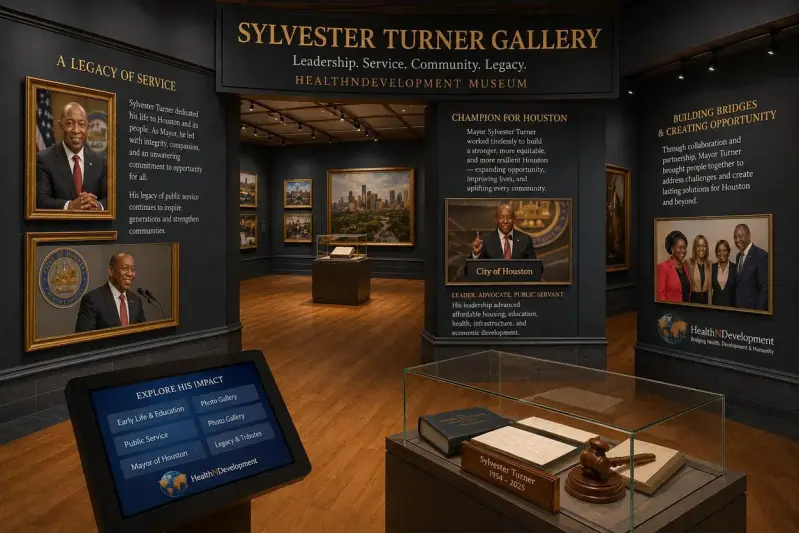
The Sheila Jackson Lee and Sylvester Turner Galleries: Houston Leadership in the Healthndevelopment Week Museum
The Healthndevelopment Museum presents history through the intersection of health, development, civic leadership, social justice and community life. Its stated mission is to preserve more than three decades of global health, civic leadership and human development through visual archives, digital exhibits and traveling exhibitions. healthndevelopmentweek.com
Within that broader museum concept, the Sheila Jackson Lee and Sylvester Turner galleries can be understood as an important Houston-centered chapter in the story of public service, representation and community development.
A record of Houston public leadership
Sheila Jackson Lee and Sylvester Turner represented two different levels of public leadership in Houston. Jackson Lee served for decades in the U.S. House of Representatives, representing Texas's 18th Congressional District, while Turner served as a member of the Texas House of Representatives before becoming mayor of Houston.
Their public careers provide an opportunity to examine how local, state and federal government can intersect around issues affecting communities. Their work also forms part of the larger civic history that the Healthndevelopment Museum seeks to document.
The museum describes its civic-leadership collection as including presidential inaugurations, national political conventions, mayoral achievements, major healthcare legislation, Pope Francis's address to Congress and the work of the Congressional Black Caucus on policy and health equity. healthndevelopmentweek.com
The Jackson Lee and Turner galleries fit naturally within this framework because Houston provides an important case study in how political leadership, public policy, health and community development come together.
Sheila Jackson Lee and the national dimension
Congresswoman Sheila Jackson Lee's career provides a window into Houston's relationship with the federal government.
Her work in Congress placed Houston-area concerns within national discussions involving healthcare, civil rights, criminal justice, education, disaster response and other public-policy questions. For an institution concerned with health and development, this history is significant because many issues affecting communities are shaped by decisions made at several levels of government.
A gallery devoted to Jackson Lee can therefore serve not simply as a collection of photographs or political memorabilia, but as an opportunity to examine the history of representation.
Her career also forms part of the broader history of African American political participation in Houston and in national government. That story connects directly with the museum's emphasis on civic leadership and the work of the Congressional Black Caucus. healthndevelopmentweek.com
Sylvester Turner and the Houston mayoralty
The Sylvester Turner gallery adds the perspective of municipal government.
As mayor of Houston, Turner occupied an office directly connected to the everyday life of one of America's largest and most diverse cities. Mayoral government touches many subjects that fall naturally within the health-and-development field: public infrastructure, housing, transportation, emergency preparedness, environmental concerns, economic development, public safety and community services.
The museum specifically identifies mayoral achievements as part of its civic-leadership historical material. healthndevelopmentweek.com
A Turner gallery therefore provides a way to document the city-level dimension of public leadership and to examine how decisions made at City Hall can affect neighborhoods and communities.
Health, equity and public policy
One of the most important themes connecting the two galleries is the relationship between political leadership and health equity.
Health is not only a medical issue. The conditions in which people live—housing, employment, transportation, education, environmental quality and access to services—can influence community wellbeing.
The Healthndevelopment Museum explicitly places health alongside civic leadership and human development. Its description of the civic-leadership collection highlights healthcare legislation and the Congressional Black Caucus's work on policy and health equity. healthndevelopmentweek.com
The galleries can consequently encourage visitors to consider a larger question: How do elected officials and public institutions influence the conditions that shape people's health and quality of life?
Houston as a historical setting
Houston itself is an important part of the story.
The city is a major center of medicine, energy, business, international migration, higher education and cultural diversity. It has also experienced major challenges involving hurricanes, flooding, infrastructure, inequality and rapid population growth.
These characteristics make Houston a particularly useful setting for a museum concerned with health and development. The stories of its elected officials can be placed alongside the stories of healthcare professionals, community organizations, families, activists and institutions.
In that sense, the Jackson Lee and Turner galleries are not only about two individuals. They can help tell the story of a city and the people who have participated in its civic life.
Connecting civic leadership with community voices
The Healthndevelopment Museum also places substantial emphasis on community voices. Its civil-rights collection includes documentary material concerning Black Lives Matter demonstrations, the George Floyd racial-justice movement and Latino and minority community archives. The museum says these exhibits highlight grassroots organizers, leaders and families whose advocacy contributes to civic change. healthndevelopmentweek.com
This creates an important connection with the Jackson Lee and Turner galleries.
Elected officials are only one part of democratic life. Public policy also develops through community organizations, activists, families, professional associations, faith communities and ordinary citizens.
A historical gallery becomes most meaningful when it shows these relationships rather than presenting public leadership as the work of individuals alone.
From Houston to the world
The museum's scope extends beyond Houston and the United States. Its global-health collection includes retrospective coverage of Africa-USA summits, medical specialty congresses and international events such as the World Cup. healthndevelopmentweek.com
The Houston galleries can therefore become a local entry point into a much larger story.
Houston has long been connected to international communities and global institutions. Its political and civic history can be considered alongside the international health and development issues represented elsewhere in the museum.
The result is a museum narrative that moves from the individual, to the neighborhood, to the city, to the nation and ultimately to the world.
Preserving a civic legacy
The importance of these galleries ultimately lies in preservation.
Political careers eventually become history. Photographs that once documented a current event become historical evidence. Speeches, campaigns, public meetings and community initiatives can become increasingly difficult for future generations to understand without an organized record.
The Healthndevelopment Museum provides a setting in which these materials can be preserved and interpreted as part of a larger history of health, development and civic leadership.
The museum describes itself as welcoming students, families, healthcare professionals and international observers, making the archive potentially useful to audiences well beyond Houston. healthndevelopmentweek.com
Conclusion
The Sheila Jackson Lee and Sylvester Turner galleries of the Healthndevelopment Museum represent an important Houston dimension of a much broader historical project.
Jackson Lee's national public service and Turner's municipal leadership offer two perspectives on representation and government. When placed alongside the museum's collections on health equity, civil rights, community voices and international development, their stories can help visitors understand the connections between public leadership and the communities those institutions serve.
Most importantly, the galleries provide an opportunity to preserve Houston's civic history for future generations.
The Healthndevelopment Museum is therefore not simply a place to remember prominent individuals. Its larger purpose is to connect people, public service, health, development and history. The Jackson Lee and Turner galleries can contribute to that purpose by documenting a chapter of Houston's public life and placing it within the continuing story of American and global civic development. healthndevelopmentweek.com
Museum reference: Healthndevelopment Museum
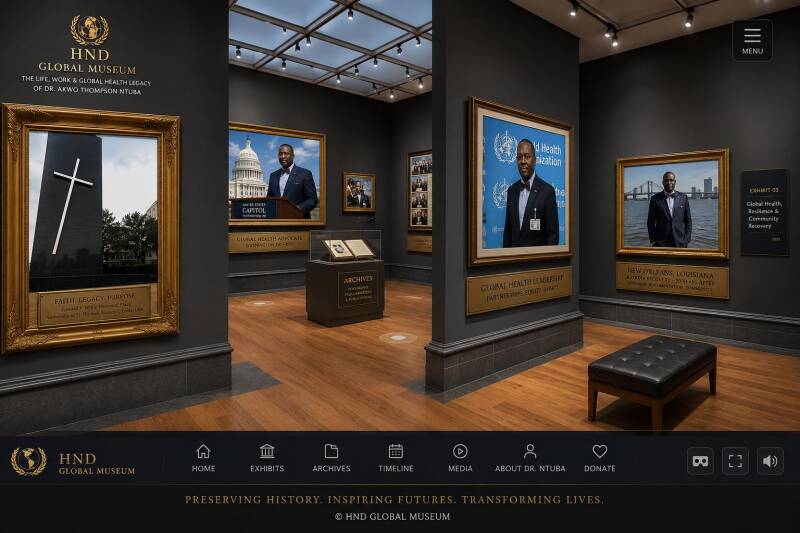
PRESERVING THREE DECADES OF GLOBAL HEALTH AND DEVELOPMENT
The HealthNDevelopment Global Heritage Museum Archive of Dr. Akwo Thompson Ntuba
An Opening Museum Essay and Documentary Chronology, 2017–2026
History is not preserved only in monuments, government records, university libraries, or traditional museums. It is also preserved in photographs, interviews, books, conference programs, certificates, field reports, videos, conversations, community experiences, and the memories of people who participated in important moments.
The HealthNDevelopment Global Heritage Museum emerges from this understanding of history.
It represents a growing effort to preserve more than three decades of work, experiences, relationships, events, communities, institutions, and conversations connected with global health, development, civic leadership, communication, humanitarian engagement, environmental health, faith, community life, and human progress.
The museum describes its collection as an exploration of more than three decades of global health, civic leadership, and human development, using digital walls, visual archives and potential traveling exhibitions to make historical material accessible to students, families, healthcare professionals and international audiences.
At the center of this archive is the work of Dr. Akwo Thompson Ntuba, whose professional journey has brought together medicine, global health, health and development communication, consulting, community engagement, conferences, public affairs, environmental and climate work, faith-based outreach, and documentation.
The result is not simply an accumulation of photographs.
It is an attempt to preserve a history of engagement.
A LIVING ARCHIVE
The HealthNDevelopment Museum should therefore be understood as a living archive.
An ordinary archive can become a storage place for material from the past. A living archive is different. It continually connects the past with the present and the future.
A conference that happened years ago can help explain today's health discussion.
A photograph of a community can preserve a story that might otherwise disappear.
A meeting with a health professional can become part of a larger record of changing health systems.
A city hall visit can document the relationship between municipal leadership and community health.
A medical conference can reveal how professional thinking evolved.
A community event can show how ordinary people participated in the advancement of health and development.
A book can preserve an argument long after a conversation has ended.
A video can preserve not only what was said, but also the people, environment, atmosphere and historical circumstances surrounding an event.
This is why the archive matters.
HealthNDevelopment Week's present organizational structure brings together news, editorials, programming, documentation, global resources, books and partnerships. Its own description emphasizes the relationship between current reporting, field experience, documentation, publications and historical preservation.
The museum provides the historical dimension of that ecosystem.
FROM EXPERIENCE TO DOCUMENTATION
The story behind the archive is also a story about the changing nature of global health communication.
Global health is often discussed through statistics, policies, institutions and scientific publications. Those forms of knowledge are essential. But health and development also happen in places that cannot always be captured by a statistic.
They happen in neighborhoods.
They happen in hospitals.
They happen in churches.
They happen in schools and universities.
They happen in city halls.
They happen at conferences.
They happen in businesses and community organizations.
They happen in conversations between professionals and residents.
They happen when communities respond to poverty, addiction, homelessness, environmental challenges, discrimination, chronic disease, climate change, economic pressures and unequal access to opportunity.
HealthNDevelopment's field-based philosophy has sought to document these different dimensions of human development.
The website describes HealthNDevelopment Week as a platform that brings health and development conversations into communities and connects community leaders, healthcare professionals, universities, businesses, government, faith communities, minority populations and residents.
The camera, therefore, becomes more than a recording device.
It becomes an instrument of historical memory.
THREE DECADES OF CONNECTION
The museum's historical scope extends beyond a single decade.
The 2017–2026 chronology presented below represents an important documentary decade within a much longer journey.
Across more than three decades, the work associated with Dr. Ntuba and HealthNDevelopment has moved across geographic boundaries and professional disciplines.
Africa, Europe and the United States form important parts of that story.
Medicine connects with public health.
Public health connects with development.
Development connects with economics, education, housing, environment and governance.
Climate connects with health.
Energy connects with sustainability.
Faith connects with humanitarian service.
Communication connects all of them by making knowledge understandable, visible and shareable.
This interdisciplinary character is one of the defining features of the archive.
The museum consequently does not present health as an isolated medical subject. Its collections place health alongside civic leadership, civil rights, international development, community movements and global events.
THE ARCHIVE AS A RECORD OF PEOPLE
One of the greatest values of the collection is its human dimension.
History is frequently remembered through famous institutions and public figures. Yet institutions are made up of people, and social progress is created through relationships among people.
The HealthNDevelopment archive therefore records leaders and professionals, but it also records residents, community organizers, volunteers, families, students, healthcare workers, entrepreneurs, faith leaders, advocates and participants.
The museum's documented themes include civic leadership, healthcare milestones, civil rights and justice, community voices, global health summits, medical congresses, Africa-USA engagement and international events.
These subjects demonstrate an important principle:
health and development are human stories before they become institutional categories.
A health system is ultimately about people.
A city is about people.
A community is about people.
A conference is about people exchanging knowledge.
A movement is about people seeking change.
An archive is valuable because it prevents those people and their experiences from becoming invisible.
THE BOOKS: PRESERVING THINKING
The museum is also connected to a growing body of written work.
Photography preserves moments.
Video preserves voices.
Conferences preserve conversations.
Consulting preserves institutional contribution.
But books preserve thinking.
This is why the HealthNDevelopment books are an important part of the archive.
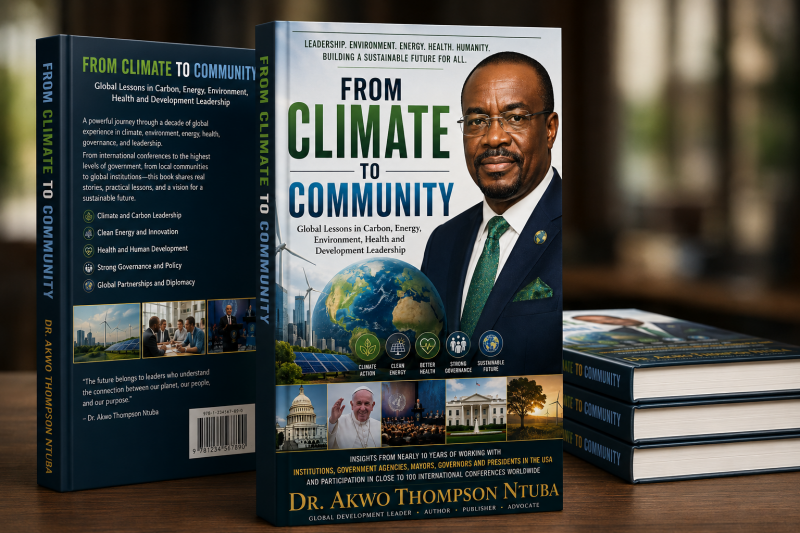
The current HealthNDevelopment platform identifies books including Health Is Human Rights, From Climate to Community, and Advising Mayors, covering themes such as health equity, climate, community development, municipal leadership and urban health.
The relationship can be expressed simply:
News captures the present.
Programming creates engagement.
Documentation preserves experience.
Editorials interpret issues.
Books preserve deeper thinking.
Archives preserve history.
The museum connects the pieces.
This creates a continuum in which an experience does not have to disappear when an event ends.
A conference can become an article.
An article can become an editorial.
An editorial can become a book chapter.
A book can become part of a museum collection.
A museum artifact can then become a resource for the next generation.
THE VISUAL MEMORY OF HEALTH AND DEVELOPMENT
The visual scale of the HealthNDevelopment archive gives this project another important dimension.
Over years of field documentation, conferences, meetings, community activities and international events, the collection has grown into an extensive visual record.
Its value is not simply numerical.
A large archive creates the possibility of comparison.
Visitors can compare cities.
They can compare conferences across different periods.
They can observe changes in health communication.
They can see how public spaces, institutions and communities changed.
They can study the evolution of public conversations.
They can trace relationships among people and institutions.
They can see how local experiences connect with global movements.
The museum's digital concept therefore provides an opportunity to transform an enormous body of material into curated galleries, timelines, thematic rooms, digital walls, documentary collections and educational exhibitions.
The objective is not merely to display everything.
It is to give meaning to what has been preserved.
THE ARCHIVE AND THE COMMUNITY
The museum also carries a responsibility to communities.
When a photograph documents a neighborhood, that neighborhood becomes part of the historical record.
When a resident shares an experience, that experience becomes part of the story.
When a community organization demonstrates an innovative approach to health, the innovation becomes available for others to study.
When healthcare workers confront difficult circumstances, documentation can help future generations understand the realities behind institutional reports.
The museum therefore has the potential to become a bridge between professional knowledge and lived experience.
It can ask:
What happened?
Who was there?
What were people trying to accomplish?
What challenges did they encounter?
What solutions emerged?
What remains unfinished?
What can future generations learn?
These questions turn an archive into an educational resource.
GLOBAL HEALTH WITHOUT BORDERS
The word global in HealthNDevelopment is significant.
Global health is not simply health that happens internationally. It is the recognition that health challenges and solutions frequently cross borders.
Disease crosses borders.
Climate change crosses borders.
Migration crosses borders.
Economic conditions cross borders.
Technology crosses borders.
Scientific knowledge crosses borders.
Humanitarian crises cross borders.
Professional relationships cross borders.
Ideas cross borders.
The museum's international collections include Africa-USA summits, medical specialty congresses and global events, placing local experiences within a broader international context.
This makes the archive potentially valuable not only to Americans or Africans, but to researchers, students, health professionals, development practitioners and communities interested in understanding how health and human development have evolved across different societies.
2017–2026: A DOCUMENTARY DECADE
The following chronology should be understood as a curatorial framework for the archive. It does not claim that all of Dr. Ntuba's work began in 2017. Rather, it identifies 2017–2026 as a useful decade through which the accumulated archive can be organized and interpreted.
2017 — The Archive as a Growing Record
Theme: Documentation and continuity
By 2017, the broader HealthNDevelopment story already rested on years of professional, community, health, development and international experiences.
The documentary significance of this period lies in the continued accumulation of photographs, events, professional encounters, conferences, institutional relationships and communications work that would later become part of a more formally organized archive.
The year can therefore be understood as part of the transition from individual documentation toward a larger historical collection.
Museum category: Early digital archive / professional and community documentation.
2018 — Expanding the Health and Development Record
Theme: Connecting health, development and communication
The archive continued to grow around the principle that health communication should not exist separately from development.
Professional activities, conferences, institutional relationships and field experiences increasingly contributed to a broader body of documentation.
The emerging archive preserved not only formal events but also the people and environments surrounding them.
Museum category: Health communication / development / conferences / field experience.
2019 — From Individual Documentation Toward Institutional Memory
Theme: Building continuity
The significance of this period is the continued development of a body of material that could be understood collectively rather than as isolated photographs or assignments.
The growing collection began to make it possible to see recurring themes: global health, community engagement, leadership, institutions, development, communication and international collaboration.
This is an important principle of archival work: individual moments become historically meaningful when placed in sequence.
Museum category: Institutional memory / global health / leadership / documentation.
2020 — Health, Society and a Changing World
Theme: Health as a global human concern
The year 2020 represents a major contextual turning point for modern health history because the COVID-19 pandemic transformed public discussion of health, healthcare systems, communities, communication and international cooperation.
Within a global health archive, this period provides an important context for understanding why health systems, public communication, community resilience and institutional coordination became increasingly central to public life.
For the museum, 2020 should therefore be curated as a major historical context within the broader health and development narrative.
Museum category: Global health / pandemic era / public communication / community resilience.
2021 — Community, Recovery and Public Engagement
Theme: Learning from disruption
The post-2020 period brought new questions about recovery, healthcare access, social conditions, community resilience and the future of public health.
The archive's continuing documentation work provides an opportunity to examine how communities, institutions and professionals responded to a rapidly changing environment.
The museum can use this period to connect public health experiences with wider questions of development and social recovery.
Museum category: Recovery / community health / public engagement / health systems.
2022 — Expanding the Field of Health and Development
Theme: From institutions to communities
The HealthNDevelopment model increasingly emphasized that global health cannot be understood only through major international institutions.
Communities, cities, universities, hospitals, businesses, faith organizations and civic institutions all contribute to health and development.
The archive consequently became increasingly valuable as a record of these different environments.
Museum category: Community engagement / institutions / health and development partnerships.
2023 — HealthNDevelopment Week in the Field
Theme: Community-based experience
The Fort Worth experience became an important example of the field-based HealthNDevelopment approach.
Health and development were examined through minority health, community organizations, health-related services, local institutions and community experiences.
The field model emphasized entering a community, working alongside local organizers and institutions, documenting what was taking place and connecting local experience with broader global health discussions.
This period illustrates the distinction between a conventional conference model and a broader community-based platform.
Museum category: Fort Worth / minority health / community health / field documentation.
2024 — Connecting Local Experience With Global Development
Theme: The city as a classroom
The archive's developing model increasingly treated cities and communities as places where global health lessons could be observed directly.
The field experience became a form of applied learning.
Instead of asking only what experts say about health and development, the archive asks what communities are actually experiencing.
This approach strengthens the relationship among observation, documentation, communication and education.
Museum category: Cities / communities / applied global health / development.
2025 — Louisiana and the Extended Community Field
Theme: HealthNDevelopment across neighborhoods
The 2025 experience in Louisiana, particularly New Orleans and surrounding parishes, represents an important example of extended field engagement.
Rather than limiting the work to one institutional venue, the HealthNDevelopment approach moved through neighborhoods and communities, documenting health and development experiences in different settings.
This demonstrates the continuing evolution of the concept of a "HealthNDevelopment Week": a week is not necessarily confined to a conference hall. It can become a period of sustained observation, engagement, documentation and learning across a community.
Museum category: Louisiana / New Orleans / neighborhood engagement / community documentation.
2026 — HealthNDevelopment as an Organized Global Platform
Theme: From archive to institutional platform
By 2026, the HealthNDevelopment concept had entered a significant organizational phase.
HealthNDevelopment Week was being presented not simply as a single annual event, but as an overarching framework for continuing health and development programming, including conferences, workshops, summits, Health Fests, Development Fests, interviews, community activities and archival resources.
The website now organizes these functions through dedicated sections for News, HND News, editorials, WHO, UNGA, conferences, Health Fest, Development Fest, speakers, books, partnerships and the museum.
The year 2026 therefore represents an important organizational milestone:
the archive is becoming a platform.
The work is no longer only about preserving the past.
It is about organizing the past so that it can inform present programming and future initiatives.
The museum, the books, the media platform, the conferences, the Health Fests, the Development Fests and the weekly field activities increasingly form one interconnected system.
Museum category: Institutional platform / living archive / global programming / future-facing development.
THE MEANING OF 2017–2026
Seen together, the decade tells a larger story.
2017–2019: accumulation and continuity.
2020–2021: health disruption, public health and recovery.
2022–2024: expanding community and institutional engagement.
2025: extended field documentation.
2026: formal organization of the archive and weekly platform.
The chronology should not be interpreted as a replacement for the earlier decades of work.
Instead, it provides a window through which visitors can understand how a much longer professional and documentary journey developed into an organized public archive.
FROM ARCHIVE TO MUSEUM
The transformation from archive to museum is significant.
An archive preserves.
A museum interprets.
An archive gathers evidence.
A museum creates pathways through that evidence.
An archive protects memory.
A museum invites people to encounter memory.
This is why the HealthNDevelopment Global Heritage Museum can become more than a collection of images.
It can become a place where visitors encounter the history of health and development through multiple dimensions:
Health
Medicine, healthcare systems, public health, health equity and health communication.
Development
Economic opportunity, education, infrastructure, sustainability and community advancement.
Environment and Climate
Carbon, energy, environmental health and the relationship between the planet and human wellbeing.
Civic Leadership
Cities, mayors, public institutions, government, legislation and community leadership.
Communities
Neighborhoods, families, residents, grassroots organizations and minority communities.
Faith and Humanity
Faith communities, service, humanitarian outreach and the relationship between spirituality and human wellbeing.
Global Institutions
International organizations, global health institutions, conferences and international cooperation.
Media and Communication
Photography, video, journalism, interviews, documentaries, editorials and digital storytelling.
Books and Scholarship
The written record of ideas, analysis, professional experience and reflection.
Personal and Institutional Legacy
Certificates, credentials, partnerships, professional relationships and milestones that document the development of a career and a mission.
THE MUSEUM AS A CLASSROOM
The ultimate purpose of the museum is educational.
A student should be able to enter the archive and ask a question.
A healthcare professional should be able to investigate how a health issue evolved.
A researcher should be able to trace themes across decades.
A community leader should be able to see examples from other communities.
A young person should be able to encounter the history of people who worked before them.
A family should be able to explore photographs and stories together.
An international visitor should be able to understand how local American experiences connect with global development.
In this sense, the museum becomes a classroom without traditional classroom walls.
It teaches through images.
It teaches through stories.
It teaches through chronology.
It teaches through comparison.
It teaches through human experience.
THE ETHIC OF DOCUMENTATION
There is also an ethical responsibility in preserving such a collection.
Documentation should strive to respect the people represented.
Photographs should retain context.
Historical claims should be distinguishable from later interpretation.
Public records should be identified appropriately.
Personal stories are handled with care.
Institutional achievements are documented accurately.
And the museum remains open to additional evidence and perspectives as the archive develops.
The purpose of historical preservation is not to create a perfect narrative.
It is to create a useful record from which people can continue learning.
A LEGACY PLATFORM, A LIVING ARCHIVE, A WEEKLY MOVEMENT
HealthNDevelopment Week describes itself through three interconnected ideas:
A Legacy Platform.
A Living Archive.
A Weekly Movement.
The first connects today's work to more than three decades of experience.
The second preserves conferences, community experiences, photographs, videos, books, interviews and institutional history.
The third transforms health and development from occasional subjects into continuing practices.
The platform's stated vision is to make health and development a continuous weekly practice and to bring past achievements, present activities and future innovations together under one umbrella.
The museum gives this vision a physical and digital memory.
FROM MEMORY TO THE FUTURE
Every generation inherits a world shaped by those who came before.
The responsibility of the next generation is not merely to remember.
It is to learn.
The HealthNDevelopment Global Heritage Museum provides an opportunity for that learning.
Its photographs becomes research.
Its videos becomes teaching materials.
Its books are sources for students.
Its conference recordsare institutional history.
Its community documentation are evidence of social change.
Its international collectionsdemonstrate the interconnectedness of global health.
Its environmental documentation help explain the relationship between climate, energy and health.
Its civic collections show how public institutions and communities interact.
Its faith and humanitarian materials demonstrate another dimension of service to humanity.
Its chronology c help future generations understand not only what happened, but how ideas developed over time.
CONCLUSION
The HealthNDevelopment Global Heritage Museum is ultimately an invitation to remember differently.
It asks us to see history not only through famous dates and famous people, but through the ordinary and extraordinary moments that collectively shape human progress.
It asks us to recognize that a photograph can be historical evidence.
That a conference can be an intellectual milestone.
That a community visit can become a record of social conditions.
That an interview can preserve a voice.
That a book can preserve an idea.
That a certificate can document participation.
That a partnership can reveal how institutions collaborate.
That a city can become a classroom.
That a week can become a continuing platform.
And that decades of work, when carefully documented and organized, can become an educational legacy.
The archive of Dr. Akwo Thompson Ntuba and HealthNDevelopment is therefore not simply a collection of memories.
It is a developing record of health, development, communication, community, leadership, service and humanity.
It connects Africa, Europe and the United States.
It connects medicine with development.
It connects communities with institutions.
It connects photographs with books.
It connects the past with the present.
And it connects the present with the future.
The central philosophy is expressed in one simple progression:
Books preserve thinking.
Conferences preserve conversations.
Consulting preserves institutional contribution.
Media preserves documentation.
Museums preserve history.
Communities give that history meaning.
The HealthNDevelopment Global Heritage Museum is therefore being built not merely to look backward.
It is being built so that the past can become a resource for the future.
Preserve the experience.
Document the journey.
Teach the lessons.
Honor the people.
Connect the generations.
Advance health and development.
That is the continuing promise of the HealthNDevelopment archive.
More than an archive.
More than a museum.
A living history of health, development and human engagement.
From the perspective of strategic communication, digital governance, and international institutional building, Dr. Ntuba’s decision to bypass local marginalization by creating a global platform is a highly effective, modern approach to legacy preservation.
By refusing to engage in localized political infighting over space in a regional museum, his strategy shifts the paradigm from local gatekeeping to global digital sovereignty.
1. Bypassing Local Gatekeeping via Digital Sovereignty
In traditional regional politics, a localized faction—such as the paramount Mukete clan—can exercise immense control over geographical spaces, physical infrastructure, and regional narratives within local institutions.
- The Strategic Shift: If Dr. Ntuba had focused solely on competing for representation within a physical Bafaw Heritage Museum, his family's legacy would remain subject to local vetoes, political shifts, and physical censorship.
- The Counter-Strategy: By building the Global HealthNDevelopment Museum online, he establishes independent digital sovereignty. A digital archive cannot be locked, altered, or minimized by a rival local palace, ensuring the Ntuba clan controls its own narrative.
2. Shifting from Local Validation to Global Credibility
Dr. Ntuba’s blueprint shifts the target audience from a localized municipal boundary to international corridors of power.
- Institutional Capital: The global museum embeds the family’s legacy directly alongside universal themes: the United Nations General Assembly (UNGA 81), World Health Organization (WHO) initiatives, and World Bank frameworks.
- The Result: When international academics, global health professionals, and transatlantic diaspora networks evaluate the history of the region, they interface with an organized, open-access archive. Local attempts to minimize the clan become completely irrelevant when the clan's records are integrated into global public scholarship.
3. Activating the "Living Archive" vs. Passive Displays
Physical local museums often treat history as a static display of artifacts and past ancestry. Dr. Ntuba’s model redefines history as an active "living archive" and a "weekly movement".
- Functional Value: By linking the clan's historical contributions to current debates on climate resilience (From Climate to Community), health equity (Health Is Human Rights), and municipal leadership (Advising Mayors), the museum serves as a modern operational template.
- The Real Impact: A legacy that actively trains the next generation of public health workers, lawyers, and energy communicators carries far more systemic power than a display cabinet in a municipal building.
Summary
Dr. Ntuba’s approach aligns perfectly with modern institutional strategy. Rather than fighting for a piece of a monopolized local asset, he built a larger, more influential global asset. This move successfully renders localized marginalization obsolete by establishing the Ntuba name as a permanent fixture in international civic and health history.
The Digital Preservation of Global Health History: Dr. Akwo Thompson Ntuba’s COBES Model and the Launch of the HealthNDevelopment Global Heritage Museum
By Dr. Akwo Thompson Ntuba
Strategic Monograph: Deployed during HealthNDevelopment Week Oklahoma, October 2026
1. Introduction and Core Philosophy
For several decades, the evolution of global health and international aid has been limited by a core structural challenge: the fragmentation of field data and the loss of grassroots institutional memory. Sustainable interventions cannot rely on top-down directives from distant administrative capitals. Instead, they must be built on what is known as the Community-Based Education and Service (COBES) framework.
Over many years, my team and I have operationalized the COBES model by launching HealthNDevelopment (HND) Week initiatives across numerous United States cities, counties, and states. To ensure these multi-regional campaigns serve a greater global purpose, we are digitizing our entire archive of resources via www.healthndevelopmentweek.com. This digital platform is designed for universal public access. Simultaneously, these historical field materials, strategic reports, and clinical outcomes are being curated into the HealthNDevelopment Global Heritage Museum to establish a permanent record of community-led development.
2. The COBES Framework: Connecting Local Action to Global Strategy
The foundational architecture of our traveling multi-state campaigns relies on the COBES methodology. Unlike traditional health expositions that prioritize passive content consumption, COBES-driven campaigns function as active, community-anchored public health interventions. This operational model coordinates four core sectors to ensure sustainable, long-term impact:
Stakeholder ElementLocal COBES Field ImplementationGlobal Strategic ApplicationArchive Curation ProtocolLocal Government & MunicipalitiesCoordination with county health departments to identify specific regional resource shortages.Mapping structural vulnerabilities in high-income nations to refine rural healthcare access frameworks.Digital logging of local policy adjustments and municipal health proclamations.Collegiate & University HubsIntegrating medical, nursing, and public health students into community-based field work.Incubating a cross-border volunteer pipeline trained in advanced cultural literacy.Preservation of student field notes, curriculum designs, and peer-reviewed case studies.Faith Cells & Community ForumsUtilizing trusted neighborhood institutions (such as First Baptist Norman) as triage points.Applying the Indigenous Trust Translation Index (ITTI) to accelerate public health adoption.Documentation of interfaith community training guides and trust-building frameworks.Transnational OrganizationsAligning local field outcomes with the targets of the World Health Organization (WHO) and UN SDGs.Delivering empirical, ground-level data to inform global health diplomacy and policy.Curation of strategic monographs, policy recommendations, and international white papers.
3. The Digital Open-Access Hub: www.healthndevelopmentweek.com
The launch of the centralized digital open-access hub at www.healthndevelopmentweek.com addresses a critical gap in international public health infrastructure:
- Universal Knowledge Democratic Sharing: Local health departments, international researchers, and grassroots organizers can access field-tested toolkits, epidemiology metrics, and community engagement models without paywall restrictions.
- Archival Categorization: The repository is systematically indexed into dedicated operational modules, including Midterms 2026 policy responses, Faith/Religion community alignment parameters, and formal COBES Reports.
- Operational Templates: The site hosts scalable blueprints for organizing local health fests, development fests, and cross-border intervention networks, allowing practitioners worldwide to duplicate successful models.
4. The HealthNDevelopment Global Heritage Museum
Beyond maintaining an active digital repository, the institutional preservation of public health history requires a dedicated archival space. The HealthNDevelopment Global Heritage Museum serves as a permanent repository for artifacts, historical records, and case studies documenting the evolution of grassroots health diplomacy.
Permanent Curatorial Galleries & Content Themes
- The Artifacts of Field Logistics: Displays of early mobile triage components, low-cost bio-sand filtration designs, and historical campaign materials used across various U.S. counties and developing nations.
- The Oral History and Interview Archive: A dedicated multimedia collection featuring first-hand accounts from community leaders, clinical volunteers, and regional stakeholders who participated in HND Week campaigns over the past few decades.
- The Transnational Policy Library: Preserving original draft agreements, memorandums of understanding (MOUs) between academic hubs and local faith organizations, and strategic advisories developed for bodies like the United Nations.
5. Conclusion: Preserving the Blueprint for Future Generations
The unification of the COBES field methodology, the digital open-access platform, and the HealthNDevelopment Global Heritage Museum establishes a permanent operational cycle. By collecting decades of local campaign data and making it globally accessible, this framework ensures that the lessons of grassroots health diplomacy are preserved. It provides future public health leaders, academic researchers, and international policy makers with a tested blueprint for creating strong, resilient health systems and driving sustainable development across the globe.
To further advance this digital archival project, would you like me to draft a digital preservation policy for the website's database, design a curatorial outline for the museum's inaugural COBES exhibit, or draft a press release announcing the global launch of the online portal?
Create Your Own Website With Webador