

Insights and perspectives
Welcome to the official publication space for HEALTHNDEVELOPMENT WEEK. Explore critical thought, international policy analyses, and expert dialogues shaping global security, healthcare, and sustainable development.

Global security, national interest, and the hypocrisy of international politics
By Dr. Akwo Thompson Ntuba
I hold that bad international actors must be checked. At the same time, I recognize that the international system is complicated and that no nation, institution, political party, or leader has a monopoly on wisdom, justice, or the solutions to the world's problems.

Evaluating major powers in modern geopolitics
From my perspective, the United States has historically played an important role in confronting governments, organizations, and movements that have posed serious threats to international security. That role should not automatically be dismissed simply because the United States is a powerful nation or because some of its policies are controversial.

Balancing accountability with global contributions
The United States, like every other major power, should be held accountable for its actions. But accountability should not become an excuse for ignoring the contributions the United States has made to international security, humanitarian assistance, development, and global health.
Global Security, National Interest and the Hypocrisy of International Politics
By Dr. Akwo Thompson Ntuba
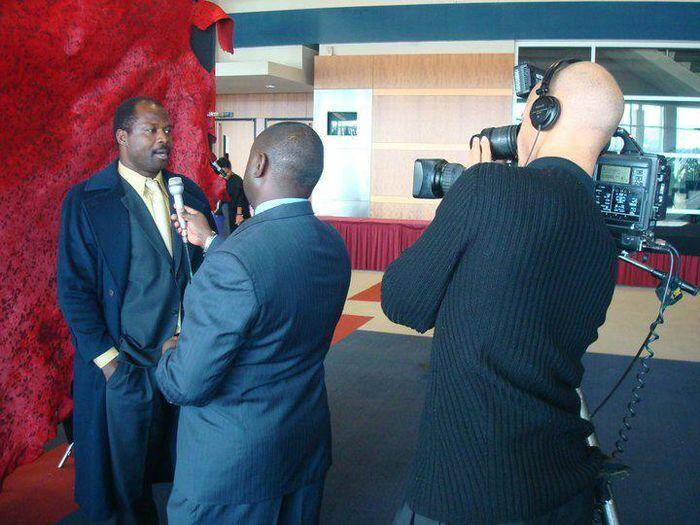
Global Security, National Interest and the Hypocrisy of International Politics
By Dr. Akwo Thompson Ntuba
I hold that bad international actors must be checked. At the same time, I recognize that the international system is complicated and that no nation, institution, political party, or leader has a monopoly on wisdom, justice, or the solutions to the world's problems.
From my perspective, the United States has historically played an important role in confronting governments, organizations, and movements that have posed serious threats to international security. That role should not automatically be dismissed simply because the United States is a powerful nation or because some of its policies are controversial.
The United States, like every other major power, should be held accountable for its actions. But accountability should not become an excuse for ignoring the contributions the United States has made to international security, humanitarian assistance, development, global health, diplomacy, and the functioning of international institutions.
At the same time, I believe that powerful nations must be careful about how they use their power.
Israel, Gaza and the Principle of Equal Human Rights
I cannot accept the killing of Israeli civilians or the taking of hostages. The attacks of October 7, 2023, and the taking of hostages were grave events that deserve condemnation. Civilians should never be deliberately targeted or used as instruments of political or military struggle.
At the same time, I cannot accept the enormous suffering experienced by innocent Palestinian civilians in Gaza.
The suffering of one population cannot justify the suffering of another.
Israel has legitimate security concerns, but security cannot mean that an entire civilian population should bear the consequences of actions committed by an armed group. Likewise, Palestinian grievances and the political struggle for Palestinian rights cannot justify the deliberate killing or kidnapping of Israeli civilians.
No human being has more human rights than another. No ethnic group has more human rights than another. No religion has more human rights than another. No nation has more inherent human dignity than another.
This principle must remain at the center of any serious discussion of international security.
The international community cannot demand protection for one population while becoming indifferent to the suffering of another.
The Clash of Civilizations Should Not Become a Defense of Conflict
Samuel Huntington's The Clash of Civilizations provided one influential framework for thinking about cultural, religious, and geopolitical conflict. The book may have identified important tensions within the international system, but identifying a clash does not mean that humanity should accept the clash as inevitable or defend it as necessary.
Understanding conflict is not the same thing as justifying conflict.
Civilizations can disagree.
Religions can disagree.
Nations can compete.
Political systems can be different.
But none of these differences should become an excuse to dehumanize other people.
If we accept the idea that civilizations are destined to fight, we risk turning political and cultural differences into self-fulfilling prophecies.
The intellectual responsibility of our generation should be to understand why conflicts occur and then find ways to prevent them—not to construct intellectual arguments that make permanent conflict appear unavoidable.
Why Blame the United States for Everything?
I also question the tendency to place the blame for so many international problems exclusively on the United States.
The United States is certainly a powerful country. Its decisions affect the international system, and therefore its actions deserve scrutiny.
But the United States also contributes substantial financial resources to the United Nations system. UN financing is based on assessed contributions determined through the General Assembly, and the United States has historically been one of the largest contributors. Its assessed share of UN peacekeeping costs for 2024–2025 was 26.95 percent.
That financial contribution does not give the United States the right to control the United Nations.
But neither should the international community ignore the responsibilities and resources contributed by the United States when discussing the functioning of the international system.
My question is therefore broader:
How should the international community balance the interests of a major contributing nation with the collective interests and decisions of the wider international community?
The answer cannot be that the United States should always get its way.
But neither should the answer be that America's national interests are automatically illegitimate whenever they conflict with the preferences of other nations.
The same standard should apply to every country.
The United States Is Not Always Right—and Neither Is Anyone Else
I do not believe the United States is always right.
America has made mistakes.
American administrations have made controversial decisions.
American foreign policy has sometimes produced consequences that deserve serious criticism.
But the United States is not uniquely responsible for every global problem.
Other nations have governments with national interests.
Other nations use military power.
Other nations form alliances.
Other nations intervene beyond their borders.
Other nations use economic pressure.
Other nations influence international institutions.
Therefore, international accountability must be universal.
If we demand accountability from America, we should demand accountability from every powerful nation.
If international law applies to one country, it should apply to another.
If civilians deserve protection in one conflict, civilians deserve protection in another.
If sovereignty matters for one state, it must matter for other states.
If international institutions must be respected when their decisions favor us, they must also be respected when their decisions are inconvenient.
That is the standard I believe the international system should strive toward.
Trump, Leadership and the Complexity of Political Judgment
When I look at President Donald Trump, I do not believe that any president should be judged as though he possesses all the answers.
I also believe that political leadership cannot be reduced simply to academic credentials.
A president deals with complicated issues involving economics, war, diplomacy, immigration, trade, health, energy, technology, national security, and international relations. Formal education is one factor in a person's background, but governing also involves experience, advisers, institutions, negotiations, political judgment, and the ability to make decisions under pressure.
There are actions taken by President Trump with which people strongly disagree, and there are actions that his supporters regard as necessary or beneficial.
My point is that political analysis should examine individual policies and their consequences rather than assuming that everything done by one president is either entirely good or entirely bad.
No president has all the answers.
And that includes former presidents.
Terrorism and the Question of Force
I believe that terrorist organizations and groups that deliberately target civilians must be confronted.
We cannot create a world in which violence against civilians is rewarded with political concessions simply because the perpetrators are willing to use extreme violence.
However, confronting terrorism does not mean that every use of military force is automatically justified.
International law recognizes circumstances in which force may be used in self-defense, while also establishing important restrictions on the use of force and protections for civilians.
Therefore, the international community must distinguish between the necessity of confronting violent actors and the legality and proportionality of the methods used to confront them.
Military force can be necessary in particular circumstances. But counterterrorism also requires intelligence, policing, financial controls, diplomacy, international cooperation, border security, prosecution, prevention, and community-based strategies.
The objective should be to stop terrorism without creating conditions that produce another generation of violence.
When Multilateral Decision-Making Becomes Paralysis
I also recognize the limitations of multilateral decision-making.
Democracy, consultation, negotiation, voting, consensus-building, and international diplomacy are important. But these processes can sometimes take too long when an immediate crisis requires action.
A population can be suffering while governments negotiate.
A security threat can develop while institutions debate.
A resolution can remain blocked because powerful countries disagree.
This creates a difficult question:
What happens when the international mechanisms designed to protect peace become too slow to respond effectively to an urgent threat?
There are circumstances in which governments may act unilaterally, but unilateral action also creates questions about legality, legitimacy, accountability, proportionality, and consequences.
Therefore, the challenge is not simply to choose between unilateralism and multilateralism.
The challenge is to develop international institutions capable of making decisions quickly enough to respond to real threats while still maintaining legal and political accountability.
Nationalism and Regionalism
I do not believe there will ever be a completely agreed international standard for world security and peace as long as nationalism and regionalism remain powerful forces.
Nations behave, in many ways, like individuals protecting their own interests.
A government is elected or established to protect its people.
A state protects its territory.
A nation protects its economy.
A country develops alliances that advance its security.
This is understandable.
But the problem begins when national interest becomes so dominant that international cooperation becomes impossible.
Global problems do not recognize national borders.
Climate change does not stop at a border.
Pandemics do not stop at a border.
Terrorism does not stop at a border.
Migration does not stop at a border.
Cybersecurity threats do not stop at a border.
Economic instability does not stop at a border.
Human suffering does not stop at a border.
The world therefore needs national governments and international institutions to find a workable balance between sovereignty and shared responsibility.
Looking at the World Through an Intellectual Lens
When I look at international affairs through an intellectual lens, I find myself asking more questions rather than simply accepting popular narratives.
Why are some civilian deaths given greater attention than others?
Why are some violations of international law condemned more strongly than others?
Why do governments demand accountability from their adversaries while defending their allies?
Why do nations invoke international law when it supports their interests but question it when it becomes inconvenient?
Why does geopolitical power influence how international events are interpreted?
Why do national interests sometimes override universal principles?
These questions do not have simple answers.
But asking them is necessary.
Intellectual examination should not mean hostility toward any particular nation. It should mean a willingness to examine the international system honestly—even when the conclusions are uncomfortable.
American Political Division
I am also concerned about political divisions inside the United States.
Republicans and Democrats have legitimate differences over policy, philosophy, priorities, and the role of government. Political competition is part of American democracy.
But political divisions can become unhealthy when partisan identity becomes more important than solving problems.
Political leaders may sometimes exploit divisions for political advantage.
Media organizations can intensify disagreements.
Interest groups can benefit from polarization.
Citizens can become more committed to defeating the opposing party than to finding solutions to the problems affecting their communities.
When that happens, the phrase “the American people” can become secondary to partisan identity.
This is dangerous because the United States is not merely a collection of political parties.
It is a nation.
Its institutions must continue functioning after individual presidents leave office and after political parties win or lose elections.
The World Needs a Higher Standard
My argument is therefore not that the United States should always prevail.
Nor is it that Israel should always prevail.
Nor that Palestine should always prevail.
Nor that the United Nations should always prevail.
My argument is that the same fundamental principles should be applied consistently.
If terrorism is wrong, it is wrong regardless of who commits it.
If civilians deserve protection, civilians deserve protection regardless of nationality.
If sovereignty matters, it must matter for powerful and weak states alike.
If international courts are independent, their independence must be respected even when their decisions are controversial.
If international institutions receive financial support from member states, they must also be accountable for how they use that support.
If governments exercise power, they must accept responsibility for the consequences.
Toward a More Honest Global Order
The world does not need blind nationalism.
But it does not need blind internationalism either.
It needs an honest internationalism that recognizes national interests while pursuing common human interests.
We need the United Nations.
We need sovereign nations.
We need international law.
We need diplomacy.
We need national security.
We need humanitarian institutions.
We need international courts.
And, in certain circumstances, governments may need to use force to confront serious security threats.
But none of these institutions or instruments should become an excuse for abandoning human dignity.
The greatest danger is not simply that nations disagree.
Nations will always disagree.
The danger is when nations begin to believe that their own people matter more than other peoples, that their own security matters more than everyone else's security, or that their own political interests justify standards they would condemn when applied to themselves.
That is where international hypocrisy becomes dangerous.
The world needs leadership in which power is accompanied by responsibility, sovereignty by accountability, security by humanity, diplomacy by action, and international institutions by genuine independence.
I believe the future of global peace will not come from pretending that nationalism, regionalism, political competition, and national interests do not exist.
It will come from building institutions and relationships strong enough to manage those realities without allowing them to destroy the shared interests of humanity.
No nation is perfect. No international institution is perfect. No political party is perfect. No civilization is perfect. No president has all the answers.
But every nation, institution, leader, and citizen has a responsibility to pursue a world in which human life is valued consistently and the principles of international conduct are not rewritten every time political interests change.
That is the intellectual and humanitarian standard by which I believe we should examine the international system.
At the Texas State Fair: Where Agriculture, Food, Culture and Community Meet Health
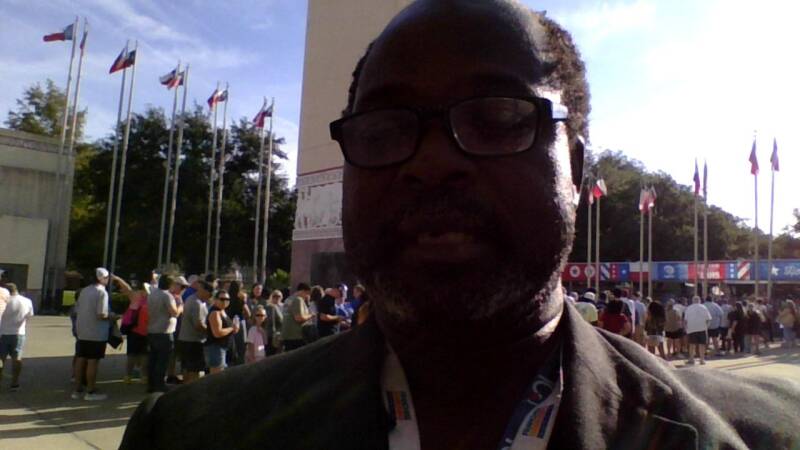
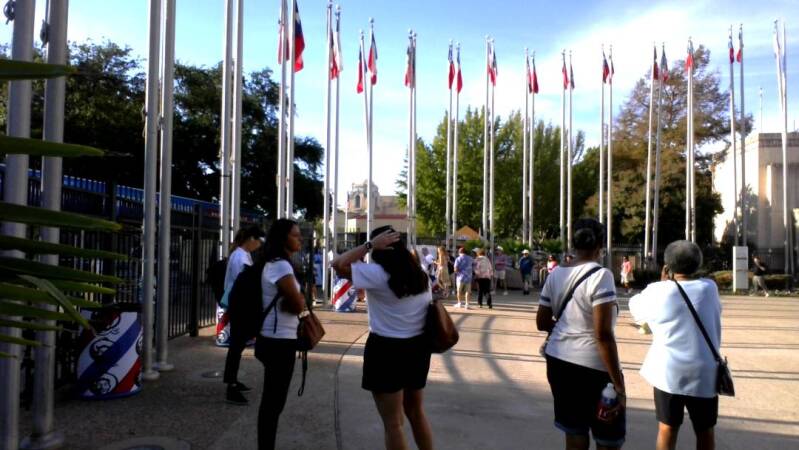
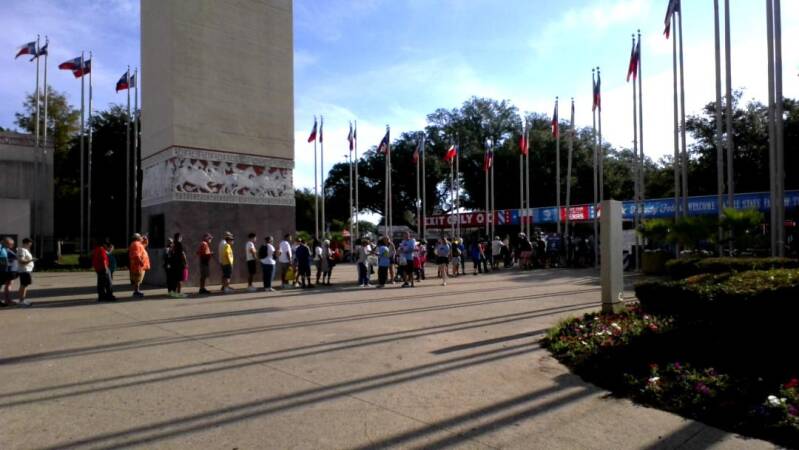
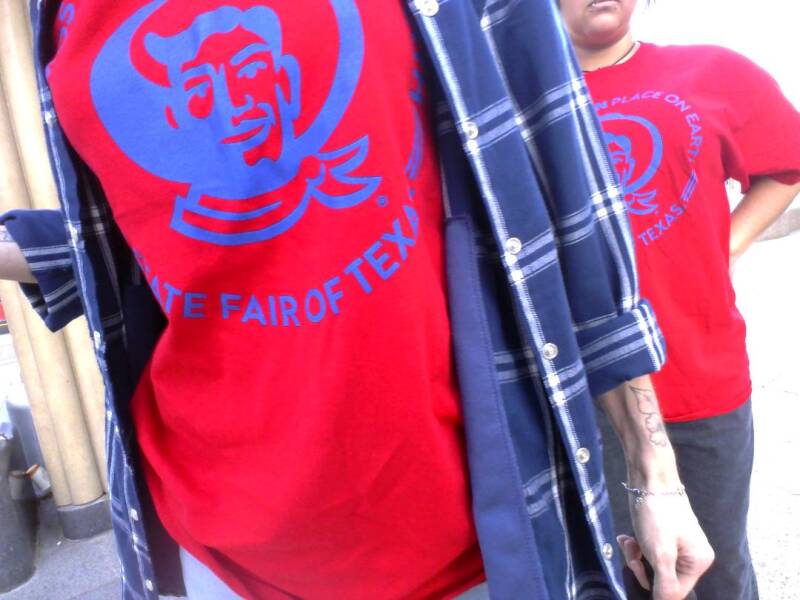
At the Texas State Fair: Where Agriculture, Food, Culture and Community Meet Health
https://www.youtube.com/watch?v=WkXdyZ9ecEE
At the Texas State Fair: Where Agriculture, Food, Culture and Community Meet Health
By Dr. Akwo Thompson Ntuba, Editor-in-Chief, Health and Development
Today, as Editor-in-Chief of Health and Development, I had the opportunity to visit the Texas State Fairgrounds and spend time speaking with workers, participants, vendors, families, and other people who make the fair such an important part of the community.
For me, this was more than a visit to a major public event.
It was an opportunity to observe, listen, ask questions, and better understand the connections between health and the many social, economic, environmental, cultural, and community factors that shape people's lives.
The fair provides a remarkable setting in which many of these determinants of health come together.
More Than Food and Entertainment
When people talk about the fair, they often have very different reasons for attending.
Some of the people I interviewed told me that the food was their primary attraction. Others were looking forward to the music and the opportunity to see their favorite artists perform. Families came for entertainment and shared experiences. Others were interested in agriculture, education, exhibits, competitions, community activities, and the broader atmosphere of the event.
All of these perspectives are important.
A major fair is simultaneously an agricultural showcase, an educational environment, an entertainment venue, an economic marketplace, and a community gathering.
It brings together farmers, food producers, students, educators, businesses, performers, public agencies, families, and visitors.
That diversity makes the fair an interesting place to examine public health.
Agriculture and the Health of Communities
Agriculture is foundational to health.
Before food reaches a restaurant, grocery store, school cafeteria, or family kitchen, there is an enormous agricultural and food-production system behind it.
The fair provides an opportunity for people to see some of that system more directly.
Agriculture connects to nutrition, food security, employment, economic development, environmental sustainability, rural communities, technology, education, and ultimately human health.
For a global health professional, these connections are impossible to ignore.
The question is not simply what people eat.
We must also ask where food comes from, how it is produced, how it is transported, how it is inspected, how it is marketed, whether communities have access to nutritious food, and what economic and environmental conditions influence food choices.
These are health questions.
Food and Nutrition
Food was one of the recurring themes during my conversations at the fair.
People come to fairs expecting to eat, explore new foods, and enjoy familiar favorites. That cultural relationship with food is an important part of community life.
At the same time, public-health professionals must continue to encourage conversations about nutrition, food safety, moderation, and access to healthy foods.
Food should not be viewed only through the lens of calories or individual choices.
Nutrition is connected to income, education, culture, geography, agriculture, transportation, public policy, and food availability.
This is why the food environment is an important part of the social determinants of health.
Public Health at the Fair
During our visit, we also discussed the work of public-health personnel responsible for food safety and inspection.
Food safety is one of those public-health functions that people may not notice until something goes wrong.
The work of food inspectors and other public-health professionals helps protect the public by ensuring that food establishments operate according to applicable health and safety requirements.
At a large event involving substantial numbers of visitors, vendors, food providers, and workers, these responsibilities become particularly important.
Public health is often most successful when it works quietly in the background—preventing problems before they become emergencies.
Education and Scholarships
Another important dimension of the fair is education.
Fairs can introduce young people to agriculture, science, technology, food systems, business, skilled trades, and other areas of learning.
They can also create opportunities for scholarships and educational advancement.
This is particularly important because education is itself a major determinant of health.
Educational opportunity can influence employment, income, living conditions, access to information, and a person's ability to navigate health and social systems.
When an agricultural and community event helps a young person discover a career path or obtain educational support, its impact extends well beyond the fairgrounds.
It becomes an investment in the future.
Economic and Community Benefits
The fair also represents an economic ecosystem.
Workers earn income. Vendors sell products. Farmers and agricultural producers showcase their work. Local businesses benefit from increased activity. Artists and performers reach audiences. Visitors spend money on food, transportation, entertainment, and other services.
Economic stability is closely connected to health.
Employment, income, housing, education, and access to essential services all influence the conditions in which people live.
Therefore, when we examine the health impact of an event such as the fair, we should look beyond medical care.
We should also examine its contribution to community economic life.
Safety and Security
Our conversations also touched on security at the fairgrounds.
Large public gatherings require thoughtful planning to protect participants, workers, families, performers, and visitors. During our visit, we observed security measures that included police presence and the use of trained detection dogs.
Security is another component of community well-being.
People need to feel that public spaces are organized and protected. Public safety, emergency preparedness, crowd management, and coordination among agencies are important elements of a successful large-scale gathering.
Health and safety therefore intersect in many ways.
Connecting the Fair to the Determinants of Health
Our participation at the fair reflects a larger mission at Health and Development: to examine the connections between health and the conditions that shape people's lives.
We often speak about the social determinants of health, but the conversation should be even broader.
Health is influenced by social conditions.
It is influenced by economic circumstances.
It is influenced by the physical and environmental conditions in which people live.
It is influenced by education, food systems, culture, employment, transportation, public safety, and community infrastructure.
And increasingly, in our interconnected world, health is also influenced by international relationships and diplomacy.
These dimensions do not exist separately.
They interact.
Why We Were There
Our presence at the fair was therefore intentional.
We were not there simply to report on an event.
We were there to listen.
We wanted to hear from the people working at the fair and from the people attending it. We wanted to understand what the event means to different members of the community.
Some came for food.
Some came for music.
Some came for agriculture.
Some came for education.
Some came for family and tradition.
Some came for business.
And many came for several reasons at once.
Each perspective contributes to the larger story.
From the Fairgrounds to Global Health
As someone who has spent decades working in global health and development, I am continually reminded that public health is everywhere.
It is in the hospital.
It is in the school.
It is in the workplace.
It is in the grocery store.
It is in the farm.
It is in the food inspection system.
It is in public safety.
And it is also at the fairgrounds.
The Texas State Fair provides a fascinating example of how agriculture, food, nutrition, education, culture, entertainment, economics, public safety, and community life intersect.
These connections are precisely why health and development must be approached from a broad perspective.
We cannot improve health simply by treating illness after it occurs.
We must also understand and strengthen the conditions that help people live healthy and productive lives.
A Community Story Worth Telling
Today's visit reminded me that every community has stories worth documenting.
The fair is one of those stories.
It is a story about agriculture and food.
It is a story about education and opportunity.
It is a story about culture and entertainment.
It is a story about work and economic activity.
It is a story about public health and food safety.
It is a story about security and community participation.
And ultimately, it is a story about people.
As Health and Development continues its work, we will continue to look beyond the traditional boundaries of health reporting.
We will continue to ask how social, economic, environmental, cultural, and diplomatic forces influence health.
We will continue to listen to communities.
And we will continue to tell the stories that help us understand the world in which health is created.
Sometimes, to understand public health, you have to leave the hospital and walk into the community. Today, I walked into the fairgrounds—and found health, development, agriculture, food, education, culture, and community all meeting in one place.

Create Your Own Website With Webador