

Latest news and dispatches
Stay informed on critical global and domestic shifts impacting community health and civic development. Our dispatches provide essential information, communication, and education across Texas and beyond.

Midterm elections and civic dialogue in Texas
A closer look at the evolving political situation in the United States and worldwide. Following landmark Republican gatherings in Dallas, democratic and social activists have organized counter-messaging rallies emphasizing healthcare equity, social safety nets, and community development priorities across the state.

Health Fest insights and updates
Exploring wellness education and modern healthcare access during Health Fest. Read about recent panel discussions, grassroots wellness demonstrations, and health policy education designed to inform advocates and civic organizers in Austin and beyond.

Development Fest and conference dispatches
Updates from our Development Fest stages and keynote conferences. Community builders, educators, and policy specialists convene to share strategic models for sustainable regional growth, public infrastructure, and cooperative community advancement.
Dr. Akwo Thompson Ntuba in Dallas: HealthNDevelopment Media, Democracy, Public Dialogue, and the Documentation of a Historic Political Moment
HealthNDevelopment Week Fort Worth 2023
Field Work Report: Minority Health, Addiction, Homelessness, Recovery and Community-Based Health Development
Introduction
HealthNDevelopment Week Fort Worth 2023 represented a field-based extension of Dr. Akwo Thompson Ntuba’s broader HealthNDevelopment work: going into communities, observing health and development realities, engaging residents and organizations, documenting community responses, and connecting local experiences with broader global-health conversations.
The Fort Worth field experience examined minority health and community health through multiple settings, including a Hispanic business and community leadership conference, populations experiencing homelessness and addiction, community organizations, the Fort Worth and Tarrant County health system, and faith-based initiatives addressing addiction and recovery.
Rather than treating health as an issue confined to hospitals and clinics, the Fort Worth work approached health as a community-development question involving housing, addiction, social support, economic opportunity, faith, public institutions, recovery services, and the ability of vulnerable populations to access care and assistance.
1. Minority Health and the Hispanic Community
One important component of HealthNDevelopment Week Fort Worth 2023 was participation as credentialed working media at the Conference of Hispanic National Chambers of Commerce USA in Fort Worth.
The conference provided an opportunity to document conversations involving Hispanic leadership, business, community development and the broader social and economic environment affecting minority communities.
For HealthNDevelopment, minority health cannot be separated entirely from the conditions in which people live and work. Economic opportunity, entrepreneurship, employment, education, social networks and community leadership can all influence the circumstances in which individuals and families experience health and illness.
The conference therefore became part of the field documentation of how minority communities organize, advocate, develop institutions and contribute to the social and economic life of their communities.
2. Encountering Fort Worth's Homeless and Addiction Crisis
Another significant part of the field experience involved direct observation and engagement with people experiencing homelessness, alcoholism and substance addiction in areas that were described during the field work as “Fort Worth Skid Row.”
This work brought HealthNDevelopment into contact with people living at the margins of the formal health system.
The experience highlighted an important distinction between simply documenting a health problem and understanding its community context.
For people experiencing homelessness and addiction, health challenges can overlap with:
- unstable or absent housing;
- alcohol and substance-use problems;
- poverty;
- social isolation;
- limited access to consistent healthcare;
- mental and behavioral health needs;
- barriers to recovery;
- food insecurity;
- unemployment and economic instability; and
- difficulty maintaining continuity of care.
The field experience therefore illustrated why community health interventions often need to extend beyond conventional clinical services.
3. Working With Community Members
A defining characteristic of the Fort Worth HealthNDevelopment Week model was direct community engagement.
Rather than remaining solely at conference venues or institutional meetings, the field work involved interaction with community members and people experiencing difficult social and health circumstances.
These encounters provided an opportunity to listen, observe and document lived experiences.
This community-based approach is central to the HealthNDevelopment Week philosophy: the community is not simply the audience for health programming; the community is also a source of knowledge about what is working, what is failing, and what remains to be addressed.
Residents, community workers, organizations, faith leaders and health professionals can each see different parts of the same health-development problem.
Bringing those perspectives together can provide a more complete understanding of community health.
4. Fort Worth and Tarrant County Health-System Connections
The field work also examined the role of the Fort Worth and Tarrant County health system in responding to community health needs.
This provided an institutional perspective alongside the community observations.
The experience demonstrated the importance of connecting public-health institutions with the populations they serve, particularly vulnerable communities that may experience barriers to accessing services.
From the HealthNDevelopment perspective, an effective community health system requires more than the existence of healthcare institutions. It also requires communication, outreach, trust, partnerships and mechanisms through which vulnerable residents can connect with appropriate services.
The Fort Worth experience therefore became an opportunity to examine the relationship between community needs and institutional responses.
5. Faith-Based Work in Addiction and Recovery
Faith-based engagement was another important dimension of the Fort Worth field experience.
The work examined faith-based responses among addiction and recovery populations, recognizing the role that churches, ministries, clergy, volunteers and faith communities can play in providing social support, encouragement, relationships and pathways toward recovery.
Faith-based organizations do not replace professional healthcare or evidence-based addiction treatment. However, they can be important community partners, particularly when they help people remain connected to supportive relationships and connect individuals with appropriate health, recovery and social services.
For HealthNDevelopment, this created an important intersection between health, spirituality, community support and human dignity.
The field experience reinforced the idea that recovery is not simply an individual medical event. It can also involve family, community, social relationships, faith, housing, employment and continuing support.
6. Connecting Minority Health With Social Determinants of Health
The Fort Worth experience demonstrated how apparently separate issues can become interconnected.
A conference examining Hispanic community and business leadership represented one dimension of minority community development.
The encounter with homeless people and people struggling with alcohol and addiction represented another.
Engagement with the health system represented the institutional dimension.
Faith-based recovery work represented a community and spiritual-support dimension.
Together, these experiences point toward a broader understanding of health development in which social determinants, community institutions and healthcare systems interact.
The central field question becomes:
What conditions enable a community to become healthier, and what barriers prevent vulnerable populations from benefiting from available health and development resources?
7. HealthNDevelopment as Field Documentation
Dr. Ntuba’s role as a working media professional added another dimension to the Fort Worth experience.
HealthNDevelopment Magazine and Media documented people, organizations, conferences, community activities and health-development conversations rather than limiting its work to written commentary.
Photography, interviews, video and field observations can preserve community experiences that might otherwise disappear from the historical record.
The Fort Worth field work therefore became both a community engagement exercise and an archive-building exercise.
It captured a particular moment in Fort Worth's health and development landscape while contributing to the larger HealthNDevelopment record of communities and institutions encountered over many years.
8. Lessons From Fort Worth
Several lessons emerged from the field experience.
First, minority health must be viewed within its wider community context.
Health outcomes are connected to economic opportunity, social conditions, community leadership and access to services.
Second, homelessness and addiction require multidisciplinary community responses.
Clinical treatment is important, but vulnerable populations may simultaneously need housing, social support, recovery services, food, employment assistance and sustained community relationships.
Third, public-health institutions cannot work in isolation.
Community organizations, residents, faith organizations and other partners can provide important connections to populations that formal institutions may not reach easily.
Fourth, faith communities can be significant partners in recovery and community support.
Their contribution is particularly relevant when faith-based engagement complements professional healthcare, addiction treatment and social services.
Fifth, listening is itself an important component of field work.
Community members possess knowledge about their own environments that may not be visible from institutional settings.
Sixth, documentation matters.
Photographs, interviews, videos and written field reports can preserve the history of community health initiatives, challenges and responses.
9. Fort Worth Within the Larger HealthNDevelopment Week Platform
HealthNDevelopment Week Fort Worth 2023 should therefore be understood not simply as a single conference or event.
It was part of a broader continuous field-based platform for health and development engagement.
The Fort Worth model brought together:
Community → Organizations → Health Systems → Faith Communities → Media → Global Health Learning
This approach allows HealthNDevelopment Week to move from city to city and community to community, identifying local health and development realities while connecting them to wider national and international conversations.
The Fort Worth experience also demonstrates why HealthNDevelopment Week can function simultaneously as a field program, learning platform, communication initiative and historical archive.
Conclusion
HealthNDevelopment Week Fort Worth 2023 brought Dr. Akwo Thompson Ntuba and HealthNDevelopment Magazine and Media into direct contact with several dimensions of community health: minority community development, Hispanic leadership, homelessness, alcoholism and addiction, recovery populations, community organizations, public-health institutions and faith-based responses.
The experience demonstrated that global health is not only discussed at international conferences. It is also experienced on city streets, in neighborhoods, churches, community organizations, health institutions, businesses and among people whose voices are often less visible in formal health discussions.
Fort Worth provided a field laboratory for observing these realities and documenting the relationships between health, development, community, faith, social vulnerability and institutional response.
In this sense, HealthNDevelopment Week Fort Worth 2023 contributed to Dr. Ntuba’s larger global-health outreach and documentation mission: going into communities, learning from people, documenting health and development advancement and gaps, connecting institutions with community realities, and preserving those experiences for future learning.
Key Takeaways From Trump’s 81st U.N. General Assembly Address in New York
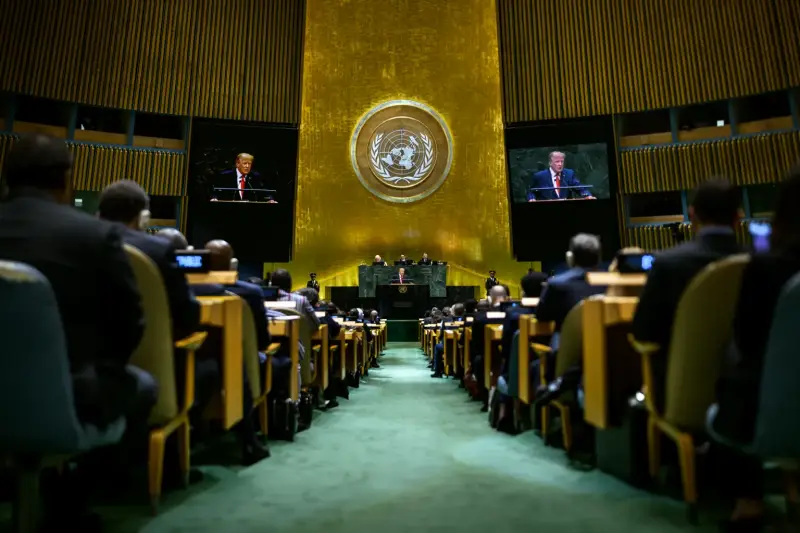
Key Takeaways From Trump’s 81st U.N. General Assembly Address in New York
President Donald Trump addressed the 81st session of the United Nations General Assembly in New York on September 22, 2026, presenting a broad argument that the United States has entered a period of renewed military, economic and diplomatic strength. The speech focused heavily on American sovereignty, Iran, security in the Western Hemisphere, immigration, international institutions and artificial intelligence. The White House+1
Below are the major themes and takeaways from the address.
1. Trump’s central message: “America is back”
The speech opened with a declaration that the United States has regained strength and confidence after 250 years of American history. Trump repeatedly contrasted his administration's approach with what he described as years of inaction by previous governments.
“America is back, and our country is stronger today than ever before.”
A recurring theme was the idea that problems should be confronted rather than postponed. Trump framed his foreign-policy approach around action, deterrence and the use of American power. The White House similarly characterized the speech as a message of American strength and resolve. The White House
2. Iran and nuclear weapons dominated the foreign-policy message
Iran was one of the most important subjects in Trump's address. He argued that preventing Iran from obtaining a nuclear weapon was a central American security objective and presented his administration's military action against Iran as a response to what he described as a long-standing threat.
Trump said the United States had given Iran opportunities to negotiate before taking military action. He also called on other countries to maintain pressure on Tehran.
The speech therefore presented Trump's Iran policy as an example of his broader philosophy: diplomacy backed by the credible threat—and, in his telling, the actual use—of American military power. Reuters reported that Trump also warned that Iran could face devastating consequences if an agreement was not reached. Reuters+1
3. September 11 and October 7 were used to frame the security argument
Trump connected the Iranian threat to two major terrorist attacks: September 11, 2001, and the October 7, 2023, attack in Israel.
He recalled the 25th anniversary of the September 11 attacks and said that the proximity of the U.N. headquarters to Ground Zero made the anniversary particularly significant. He then referenced the upcoming third anniversary of October 7 and argued that Iran's support for militant groups represented a continuing international-security challenge. The American Presidency Project+1
Trump also cited figures concerning deaths inside Iran, including his claims that more than 72,000 people had been killed by the Iranian regime and that 10,000 protesters had recently been killed. Those figures should be treated as claims made in the speech rather than independently established facts; reporting has noted that the numbers have not been independently verified and that estimates of deaths during Iranian unrest vary. JTA
4. A more assertive U.S. role in the Western Hemisphere
Another major takeaway was Trump's declaration that Washington would take a more assertive approach toward threats in the Western Hemisphere.
He argued that the United States would not allow hostile governments, criminal organizations or other threats to establish a foothold close to American territory. He specifically discussed Venezuela, Cuba and Mexico and emphasized the willingness of the United States to use military power when he believes vital national interests are at stake.
This represents a broader conception of national security in which threats in the Americas are treated as directly connected to U.S. security rather than solely as foreign-policy issues. Roll Call+1
5. Cartels and immigration were presented as national-security issues
Trump devoted substantial attention to drug cartels and illegal immigration. He said his administration had designated drug cartels as Foreign Terrorist Organizations and had authorized military action against them.
He described the cartels as terrorist organizations and compared them with ISIS. Trump also claimed that U.S. strikes against cartel drug boats had eliminated 97% of drugs entering through maritime routes. That figure is a presidential claim presented in the speech, rather than an independently verified statistic in the sources reviewed here. Roll Call
Mexico featured prominently in this portion of the address. Trump argued that Mexico must regain control over territory affected by cartel violence, while also saying that the United States would pursue greater security along its southern border.
Dr. Akwo Thompson Ntuba in Dallas: HealthNDevelopment Media, Democracy, Public Dialogue, and the Documentation of a Historic Political Moment
In 2026, Dallas, Texas became a major national stage for political communication, public debate, and media engagement. For Dr. Akwo Thompson Ntuba, founder, publisher, and chief editor of HealthNDevelopment Magazine and Media, the city represented another important chapter in his long journey of documenting the intersection between health, society, leadership, and public policy.
Arriving in Dallas to continue the work of HealthNDevelopment Media, Dr. Ntuba approached the events not simply as political gatherings, but as opportunities to study how communities communicate their concerns, how leaders present their visions, and how public issues—including healthcare, women’s issues, and social development—are discussed in the public square.
The Republican National Committee’s first midterm convention in Dallas became a major national media event. Reports described the gathering as a new type of political convention focused on mobilizing support ahead of the 2026 midterm elections. During the event, President Donald Trump announced a proposed $5,000 “dividend” for American adults if Republicans maintained control of Congress, a statement that generated extensive discussion about policy, economics, and campaign messaging.
For HealthNDevelopment Magazine and Media, such moments represent the importance of documenting history as it unfolds. Dr. Ntuba’s approach has consistently focused on capturing voices, interviews, images, and conversations from important institutions, conferences, government meetings, and community events.
At the Dallas Republican gathering, I Dr. Ntuba documented participants, speakers, and discussions through video interviews and media coverage. His work reflected the mission of HealthNDevelopment: bringing global health and development communication into broader conversations about leadership, communities, and society.
However, Dallas also demonstrated another important feature of American democracy: competing voices and public debate. Alongside the Republican convention, Democratic leaders, activists, and community advocates participated in events addressing their own perspectives and priorities. These gatherings provided space for discussions around healthcare, women's advocacy, community concerns, and social issues.
My presence at Dallas City Hall events organized by Democratic groups and community activists provided another perspective on the diversity of voices involved in public dialogue. Women leaders, healthcare advocates, and community speakers highlighted issues affecting families, access to healthcare, and broader social concerns.
This contrast between political gatherings illustrated a central theme of democratic societies: public issues are often discussed through multiple viewpoints, with different groups seeking to influence public understanding and policy conversations.
For HealthNDevelopment Media, the value of these moments is not limited to political competition. The deeper purpose is historical documentation. Through interviews, video production, photography, and storytelling, I have built an extensive archive of global health, development, government, and community events.
The Dallas experience fits into a larger pattern of our media work: documenting mayors, governors, international organizations, healthcare professionals, faith leaders, scientists, activists, and community voices. My interviews preserve conversations that might otherwise disappear and create educational resources for future generations.
The participation of journalists from major media organizations, including reporters from the Houston Chronicle, added another dimension to the event. My extensive interviews and interactions with journalists reflected the growing role of media professionals and communicators in interpreting major public events.
For a global health communicator, political gatherings are also opportunities to examine how health issues become part of national conversations. Healthcare policy, women’s health, community wellbeing, and social development often emerge as important themes during elections and civic discussions.
The Dallas events therefore became another chapter in the HealthNDevelopment archive: a record of how Americans debated ideas, presented competing messages, and engaged with issues affecting their communities.
As I Dr. Ntuba continues developing the HealthNDevelopment Global Heritage Museum, these experiences represent valuable historical materials—videos, interviews, photographs, publications, and reflections that document the relationship between leadership, communication, health, and society.
The Dallas assignment was not simply about attending events. It represented the continuing mission of HealthNDevelopment Media: to observe, document, educate, and preserve the stories of people and institutions shaping the world.
Through journalism, health communication, and global development storytelling,I Dr. Akwo Thompson Ntuba continues building an archive where future generations can study the conversations, challenges, and hopes of the present era.
HealthNDevelopment Week Dallas 2026 represents a new dimension of the HealthNDevelopment vision: taking the platform beyond traditional conferences and bringing it directly into communities, institutions, public spaces, healthcare environments, cultural gatherings, and civic conversations.
For Dr. Akwo Thompson Ntuba, founder, publisher and chief editor of HealthNDevelopment Magazine and Media, the Dallas edition became a field-based HealthNDevelopment Week experience — documenting how health, development, society, leadership, public policy, faith, community services, and human wellbeing intersect in everyday life.
Rather than being limited to a single conference hall, this field edition followed important events and institutions across the Dallas metropolitan area, creating a collection of interviews, photographs, videos, observations, and community stories that form part of the broader HealthNDevelopment archive.
Dallas as a Living Laboratory for Health and Development Conversations
Dr. Ntuba arrived in Dallas, Texas, during a period of significant public activity, using the opportunity to document different dimensions of American society through the lens of health and development communication.
The mission was not only to report events but to capture the human experiences behind them:
- the voices of participants,
- the ideas expressed by speakers,
- the work of community organizations,
- the role of institutions,
- the challenges faced by communities,
- and the continuing search for solutions that improve human wellbeing.
The Dallas field edition demonstrated the central philosophy of HealthNDevelopment: health and development are not isolated subjects; they are connected to education, economics, democracy, social justice, faith, environment, community services, and human dignity.
1. Documenting a Historic U.S. Political Party Midterm Convention
One of the major events documented during HealthNDevelopment Week Dallas 2026 was the first Republican National Committee midterm convention held in Dallas, Texas. The event took place at the American Airlines Center and brought together Republican leaders, delegates, activists, and supporters ahead of the 2026 midterm elections.
Through HealthNDevelopment Magazine and Media, Dr. Ntuba covered the event through:
- photographs,
- video documentation,
- interviews,
- observations from the field,
- and conversations with participants.
The coverage reflected HealthNDevelopment’s role as a communication platform documenting major social moments and preserving voices from different sectors of society.
Political gatherings are also community development moments because they involve discussions about issues affecting people's lives, including healthcare, immigration, economic conditions, education, family wellbeing, and the future direction of communities.
By documenting this event, HealthNDevelopment Week Dallas created a historical record of a significant moment in American civic life.
2. We The People Rally: Community Voices and Civic Engagement at Dallas City Hall
During the same period, Dr. Ntuba documented the "We The People: Rally for Democracy" held at Dallas City Hall Plaza. The rally was organized by a coalition of groups, advocates, community leaders, and participants who gathered around issues related to democracy, rights, freedoms, immigration, women's health, and other social concerns.
The event represented a different perspective within the broader civic conversation occurring in Dallas at the same time as the Republican convention. Reports described speakers and participants connected with Democratic Party organizations and civic advocacy groups addressing issues related to voting, communities, and public policy.
For HealthNDevelopment Week Dallas, the importance of this field visit was the documentation of public dialogue.
Health and development are influenced by many social factors, including:
- access to healthcare,
- the wellbeing of immigrant communities,
- women's health issues,
- civic participation,
- community representation,
- and public decision-making.
Through interviews, pictures, and videos, HealthNDevelopment preserved the voices and experiences surrounding this civic gathering.
3. Dallas Women's Expo: Women, Wellness, Entrepreneurship and Community Resources
Another important stop during HealthNDevelopment Week Dallas was the Dallas Women's Expo at the Irving Convention Center.
The expo brought together women, businesses, organizations, speakers, exhibitors, and community resources focused on areas including wellness, inspiration, entrepreneurship, products, services, and personal development. The 2026 event was scheduled at the Irving Convention Center on September 12–13, 2026.
Dr. Ntuba documented:
- keynote presentations,
- community activities,
- exhibitors,
- conversations,
- ideas shared among participants,
- and wellness-related resources.
The visit highlighted the connection between women's empowerment and health development.
Women’s wellbeing involves more than medical care. It includes:
- economic opportunities,
- education,
- family support,
- preventive health,
- nutrition,
- entrepreneurship,
- mental and social wellbeing.
The Dallas Women's Expo became another example of how HealthNDevelopment Week captures real-life environments where development takes place.
4. University of Dallas: Faith, Social Justice and Human Development
The HealthNDevelopment Week Dallas field edition also included engagement with the University of Dallas community.
The visit explored conversations around education, faith, ethics, social responsibility, and the role of religious institutions in addressing human challenges.
Particular attention was given to the historical role of Catholic social teaching and the commitment of the Roman Catholic Church to questions of:
- human dignity,
- service to vulnerable populations,
- poverty reduction,
- healthcare access,
- social justice,
- and community responsibility.
The discussion connected with the broader HealthNDevelopment philosophy that development is not only economic or technological. It is also moral, social, spiritual, and humanitarian.
5. Southwestern Medical Center, Parkland Legacy and Healthcare for Vulnerable Communities
A significant healthcare component of HealthNDevelopment Week Dallas 2026 was the visit to Southwestern Medical Center and discussions around the Dallas County healthcare system.
Dr. Ntuba documented conversations with healthcare workers, observations from the medical environment, and the experiences of patients and families encountered during the visit.
A major theme was the history and legacy of Parkland Hospital and the leadership of former Parkland President and CEO Dr. Ron Anderson, whose decades of service focused on expanding healthcare access for uninsured and underserved communities.
The story of Parkland represents an important dimension of public health:
- caring for vulnerable populations,
- providing access regardless of economic status,
- training healthcare professionals,
- and strengthening community health systems.
The visit reflected a central HealthNDevelopment question:
How do communities build healthcare systems that serve everyone, especially those who are most vulnerable?
6. Martin Luther King Jr. Community Center: The Infrastructure of Community Health
The final major field experience highlighted the importance of community-based services through a visit to the Martin Luther King Jr. Community Center.
The center demonstrated how community development happens through practical services such as:
- community court resources,
- healthcare-related services,
- WIC food assistance programs,
- libraries and educational resources,
- family support programs,
- and neighborhood-based initiatives.
For predominantly African American communities and other underserved populations, these institutions serve as important bridges between residents and essential resources.
The visit reinforced a key HealthNDevelopment principle:
A healthy community is created not only inside hospitals but also through social support systems, education, food access, justice services, and neighborhood empowerment.
HealthNDevelopment Week Dallas 2026: From Events to an Archive of Experience
The Dallas field edition demonstrates the broader meaning of HealthNDevelopment Week.
It was not simply a week of attending events.
It was a week of documenting society.
It connected:
- politics and public dialogue,
- healthcare and vulnerable populations,
- women’s empowerment and wellness,
- faith and social responsibility,
- universities and knowledge,
- community centers and grassroots development.
Every photograph, interview, video, and conversation became part of a growing archive.
The value of HealthNDevelopment Week Dallas 2026 is that it transforms temporary experiences into permanent resources. An event may end after a few hours or days, but documentation allows its lessons and stories to continue.
Conclusion: A Model for Future Field-Based Health and Development Documentation
HealthNDevelopment Week Dallas 2026 represents the evolution of HealthNDevelopment from a conference concept into a field documentation platform.
It shows that health and development exist everywhere:
- in political conversations,
- in hospitals,
- in universities,
- in women's gatherings,
- in community centers,
- in faith communities,
- and in the daily lives of people.
Through the eyes and documentation of Dr. Akwo Thompson Ntuba and HealthNDevelopment Magazine and Media, Dallas became a living classroom — a place where history, community, health, development, and human stories were captured for future generations.
HealthNDevelopment Week Dallas 2026 was not only a week of activities. It was a week of listening, learning, documenting, and preserving the continuing story of communities and the people who serve them.
Create Your Own Website With Webador